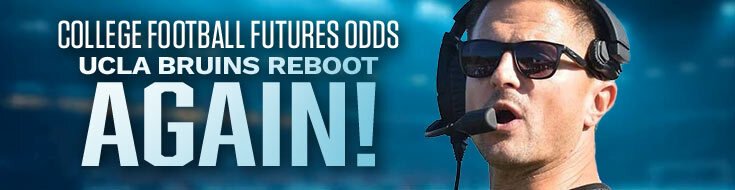
The UCLA Bruins enter 2026 under first-year head coach Bob Chesney with a clear sense of reset after a 3-9 season that ended the previous staff’s tenure. Chesney arrives from James Madison with a proven College Football Futures Odds track record of building competitive programs. Chesney has overhauled the roster, bringing in more than 40 transfers. While retaining key pieces and added high school talent. As a result, UCLA has one of the most transformed squads in the Big Ten.
AJAJ who transferred from Tennessee, returns. Following a full offseason in the new system under offensive coordinator Dean Kennedy. The Bruins added playmakers at receiver and a productive running back in Wayne Knight from James Madison. Hence, creating a more balanced and explosive offense on paper.
The offensive line remains a work in progress with several new faces. But the overall skill talent should give the unit a higher ceiling than last year’s low-scoring group. Defensively, the priority is fixing a unit that ranked near the bottom of the FBS in points and yards allowed.
Chesney and defensive coordinator Colin Hitschler brought in multiple transfers. Including edge threat Sahir West. The new staff has emphasized physicality and scheme continuity from their JMU days. An experienced secondary does provide a foundation. While the front seven aims to generate more pressure and stop the run more effectively.
UCLA Bruins Prospects Under New Coach Bob Chesney
Projections generally land UCLA in the 6- to 7-win range. In addition to a realistic path to bowl eligibility for the first time in a couple of seasons. The schedule offers several winnable home games early. And it avoids some of the Big Ten’s heaviest hitters in the first half of the year.
Road tests at Oregon and Michigan, plus the rivalry game against USC, will define the ceiling. Chesney’s high-energy approach and rapid roster construction have created genuine optimism in Westwood. Fans and gamblers see a program finally moving in a more competitive sportsbook direction.
UCLA football has been held back by a combination of structural, financial, and cultural factors. In turn, they have prevented the program from consistently competing at a high level for more than two decades.
Financial limitations stand out as the most significant College Football Odds barrier. To show, the athletic department has operated with large deficits for years, accumulating more than $200 million in shortfalls. This constrained spending on facilities, coaching salaries, and especially Name, Image, and Likeness resources. Accordingly, that was at a time when peer programs aggressively invested.
Of great concern is that its move to the Big Ten has not helped. Even after gaining access to stronger media revenue. The Bruins have lagged in the resources needed to attract and retain elite talent in the modern portal-and-NIL era.
Coaching instability and questionable hiring decisions have compounded the problem. Previously, the program cycled through Jim Mora, Chip Kelly, and a short-lived DeShaun Foster tenure marked by rapid decline.
Kelly’s scheme-driven approach produced occasional success. But it failed to sustain recruiting or adapt fully to the evolving landscape. Foster, a popular former player, was handed the job with limited coordinator experience and an incomplete roster. Thus resulting in a quick collapse. These transitions left the program without long-term continuity or a clear identity.
Recruiting and player development have also suffered. To illuminate, academic admissions standards and institutional priorities have made it harder to land certain high-end prospects. In comparison to private schools or less selective public universities. At the same time, the program often underperformed relative to the talent it did secure.